The review engine
Automated review requests, the AI that decides who to ask, and the private survey that intercepts unhappy customers.
This snapshot does the work of earning your clients more good reviews, catching unhappy customers before they post in public, and using AI to decide who is worth asking and to reply to the reviews that come in. The appointment and lead automations underneath it keep producing the happy customers who turn into those reviews. Here is what is inside, and why each piece earns its place.
Reviews are how a local business gets chosen. This snapshot builds them steadily and on purpose, instead of leaving it to whoever remembers to ask.
Once a customer is ready, the system reaches out and asks how their experience was, by email and text, with a few polite follow-ups spaced out over time so a single missed message does not cost a review. When the customer responds positively, they are guided straight to leaving a public review on Google or Facebook, which is where most local customers look first. The timing is yours to set during setup, so requests go out when the work is actually done rather than too early.
Why it earns its place: Your client builds a steady stream of public reviews without anyone having to remember to ask, and the ask lands at the right moment.
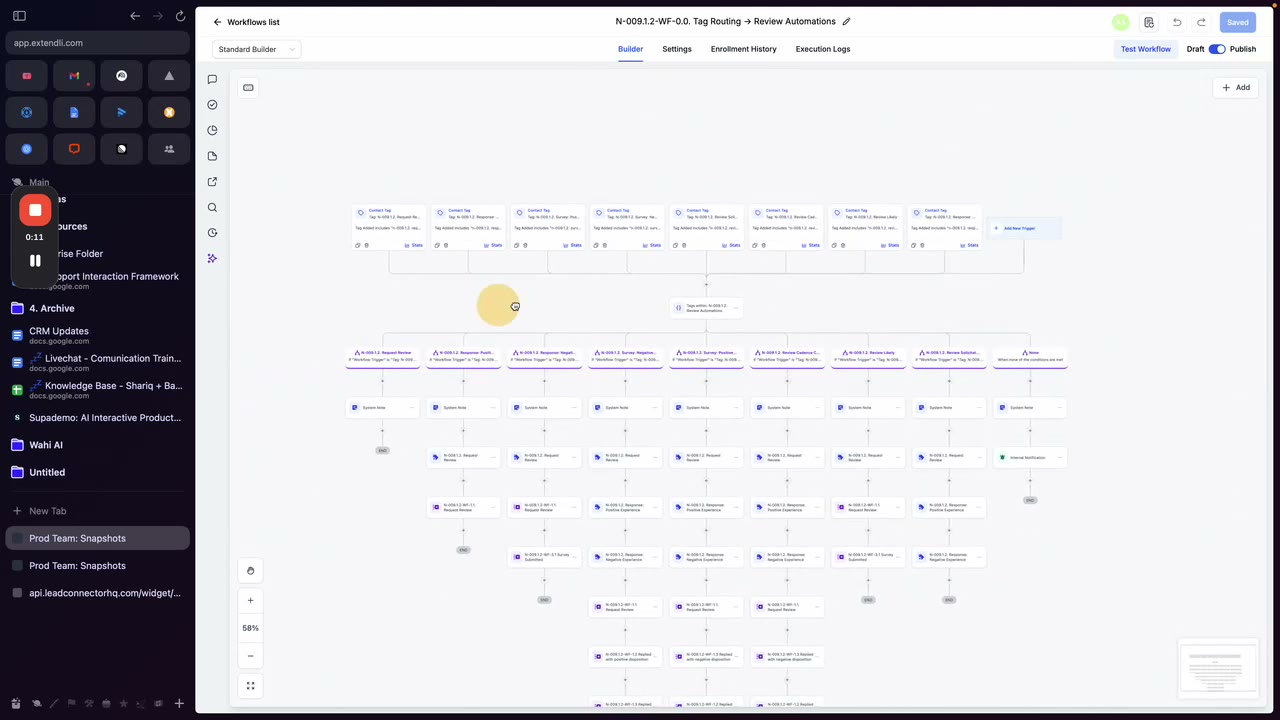
This is where the AI does the work, and it comes first. An AI agent reads each customer's conversation and looks for any signs of unhappiness. For customers with no signs of a bad experience, it triggers the automated review request, the separate step that does the actual asking. So positive and neutral customers are routed into the review request, while unhappy customers are not asked and are instead flagged to the team to handle.
Why it earns its place: Only the customers likely to say something good are routed into the public ask, which protects the rating rather than risking it. That one decision is what separates a review program that lifts a rating from one that quietly drags it down.
Winning reviews is only half of reputation. The other half is making sure a bad experience does not become a public one-star, and that the reviews already out there get a response. This snapshot covers both.
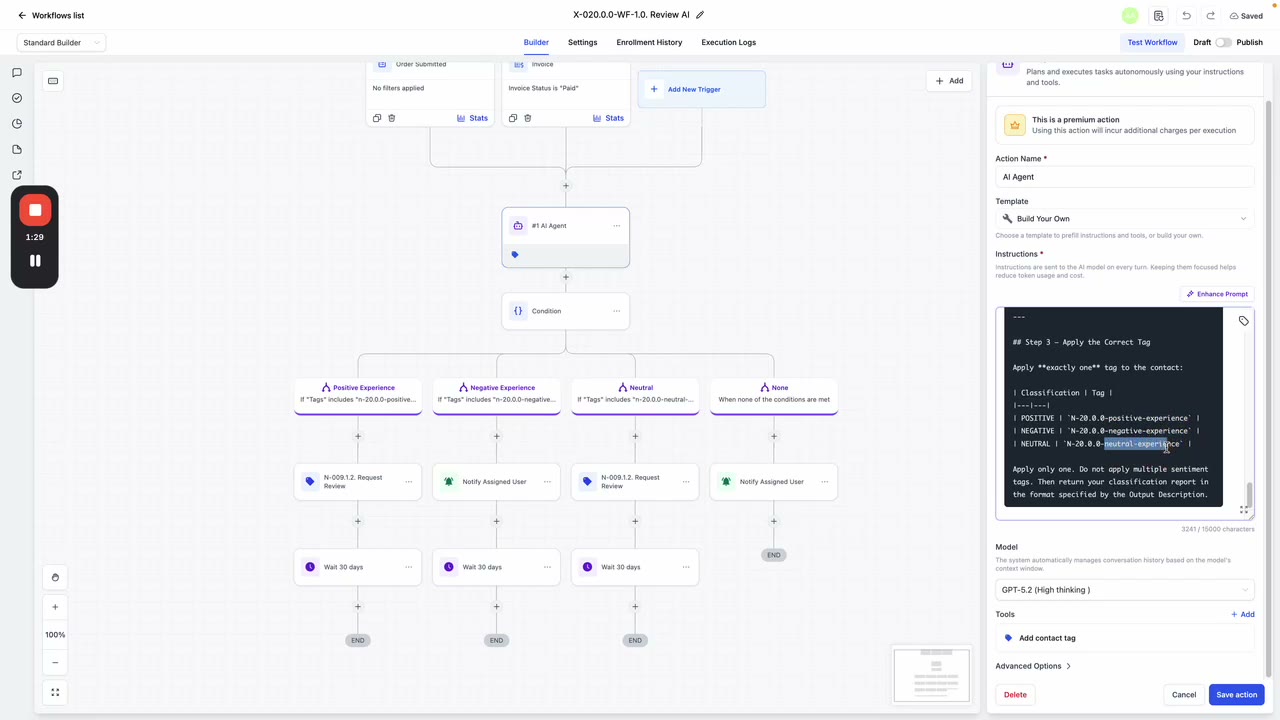
When a customer signals they were not happy, the system steps in privately. It sends a calm apology and invites them to a short private survey, and it creates a task for the team so a real person follows up. The unhappy customer is given a place to be heard that is not a public review page.
Why it earns its place: This is the single most valuable piece of reputation protection. A frustrated customer gets resolved in private instead of posting in public, and the team finds out with full context while they can still fix it.
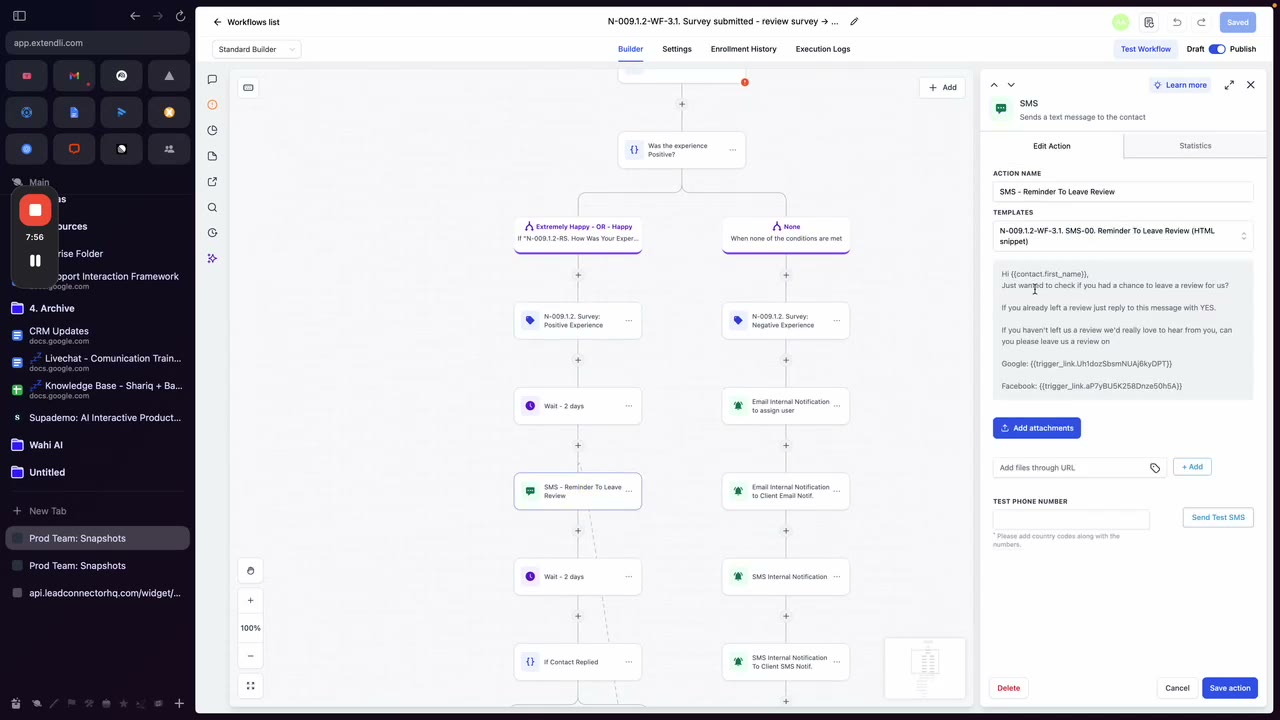
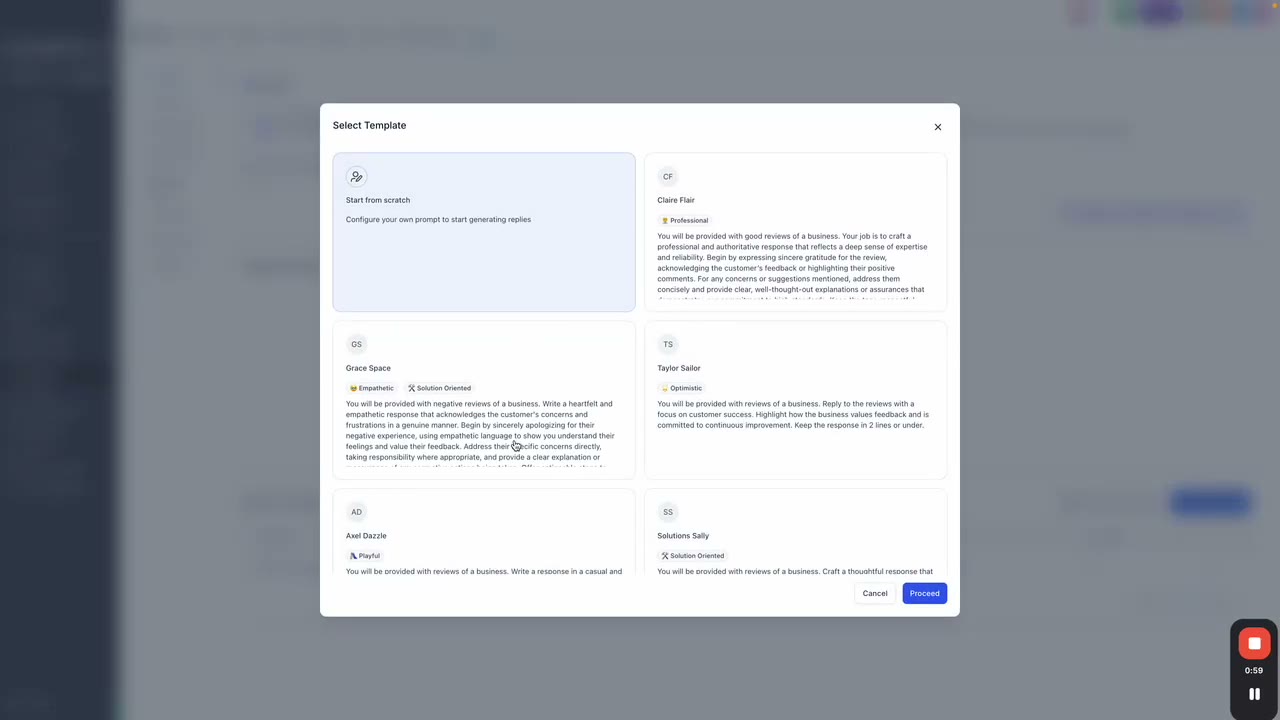
The snapshot includes an AI that can respond to incoming reviews in the business's voice. You choose how it works during setup: have it reply automatically, have it draft a suggested reply for someone to approve, or leave it off entirely. The tone is adjustable, from professional to warm to upbeat, so replies sound like the business rather than a robot.
Why it earns its place: Responding to reviews signals a business that cares, and most owners never keep up with it. This handles it at whatever level of control your client wants.
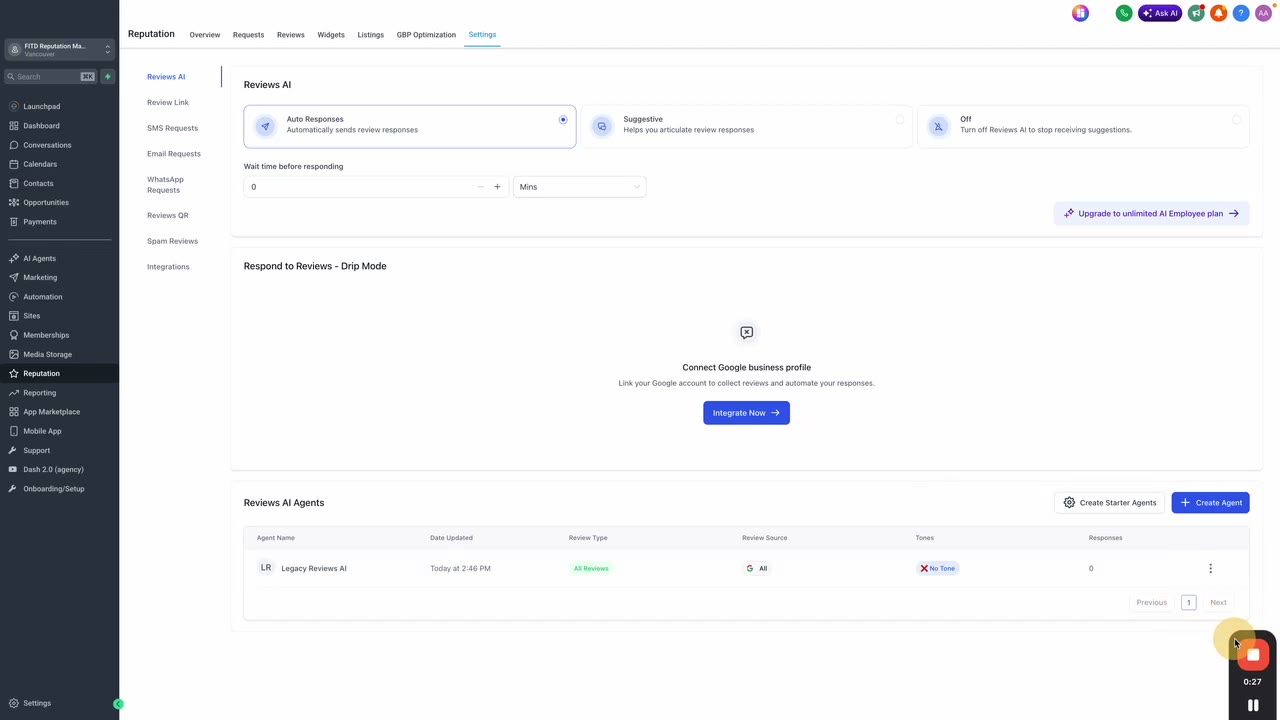
The reputation tools also filter out spam reviews, help keep review requests balanced across platforms, and include an embeddable widget so your client can show their best reviews right on their own website. Review requests can go out by text, email, WhatsApp, or a scannable code, so they meet customers wherever they are.
Why it earns its place: The reputation a client earns is also put to work, on display where new customers will see it, and kept clean of junk.
Reviews come from happy customers, and happy customers come from a business that shows up on time, follows up, and never drops the ball. That is what these supporting automations handle. They sit underneath the reputation engine and keep feeding it satisfied people to ask.
Once a call is booked, an automatic reminder sequence goes out by email and text: right away, two days out, four hours before, and ten minutes before, with a quiet-hours window on the main reminders so nobody gets a text in the middle of the night. Two minutes before the call, the system phones the rep and connects them straight to the customer the moment they answer.
Why it earns its place: Fewer no-shows and smoother calls mean more completed appointments, which means more satisfied customers heading into the review engine.
After each call, the rep gets a one-click form that already knows who the contact is. A few quick answers log the outcome, update where the customer sits in the sales process, and can send a recap or thank-you. When someone cancels or no-shows, a recovery sequence invites them to rebook and makes sure a person owns the win-back, so the appointment is not simply lost.
Why it earns its place: The sales process stays accurate with almost no manual work, and the deals that usually slip away get a real second chance.
Any inbound message becomes a tracked lead automatically, whether it is a call, a text, a Facebook or Instagram message, an email, or a website chat, each one labeled with where it came from. Leads from a website form or a Facebook ad flow in the same way and get assigned to a person, so every lead is captured and tied back to the channel that produced it.
Why it earns its place: Every lead the client pays to generate actually gets captured, and the client can see which channels are working, which means more customers and more reviews to ask for.
Automated review requests, the AI that decides who to ask, and the private survey that intercepts unhappy customers.
An AI that can reply to reviews, spam filtering, review balancing, and an embeddable review widget.
Three booking calendars, multi-touch reminders, the after-call status form, and cancellation and no-show recovery.
A ready-to-use lead form plus landing page templates, inbound-message capture from every channel with source tracking, and Facebook lead capture.
It arrives fully built under your brand. Extendly White Label Support handles the setup, and you can lean on them to tailor the timing, messaging, and connections to each client.
Extendly White Label Support handles the setup, and you can lean on them to tailor the timing, messaging, and connections to each client. Whenever you want a hand fine-tuning a client's reputation engine, they are there.